Blog


Abstract
Introduction
In recent years, DIY car accessory installation has become increasingly popular among drivers who want to personalize their vehicles, save on installation costs, and enjoy the satisfaction of doing it themselves. From enhancing convenience with a steering wheel knob or car hook to protecting your vehicle with door protectors, phone holders, and wiper stands, the market offers countless options for customization.
However, while installing these accessories may seem straightforward, proper installation is essential to ensure safety, optimal performance, and long-term durability. Even small mistakes—such as positioning a steering knob incorrectly, placing a car hook in an unsafe spot, or failing to properly secure a phone holder—can lead to reduced functionality, safety hazards, or premature wear.
In this article, we’ll explore the top 5 common installation mistakes drivers make when fitting popular automotive accessories and share practical tips to avoid them, so you can get the most out of your upgrades without compromising safety or quality.
Mistake #1 – Incorrect Steering Wheel Knob Installation
Common Mistake:
One of the most frequent errors in steering spinner knob installation is mounting the knob too close to the steering wheel spokes. This positioning can restrict hand movement, making it awkward to steer and reducing your overall control of the vehicle.
Potential Issues:
An improperly positioned steering knob can lead to reduced maneuverability, which is especially dangerous during sudden turns or emergency maneuvers. It may also cause unsafe driving conditions by forcing the driver into uncomfortable hand positions, and over time, it can damage the wheel surface due to friction or excessive pressure.
How to Avoid:
Always refer to the manufacturer’s installation instructions for the ideal placement. Typically, the knob should be installed in an area that allows a full range of motion without obstruction—often on the outer rim of the wheel, away from spokes. Make sure it’s securely fastened but not overly tightened, as excessive pressure can damage the wheel or the knob’s internal components.
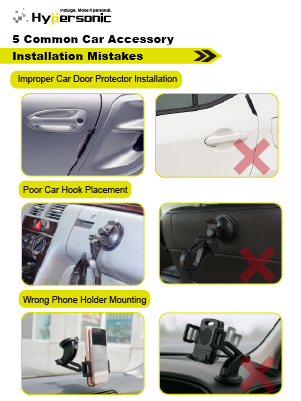
Mistake #2 – Poor Car Hook Placement
Common Mistake:
A typical error with car hook installation is placing them in spots that interfere with passenger comfort or—more critically—obstruct airbag deployment zones. Some drivers also position hooks in areas that block the driver’s rear or side vision, creating unnecessary safety hazards.
Potential Issues:
Improperly placed car hooks can reduce safety in the event of an accident, as they might hinder airbag function or cause loose items to become projectiles. Poor placement can also block visibility, making it harder to check blind spots, or create inconvenience for passengers when entering and exiting the vehicle.
How to Avoid:
Follow car hook installation tips provided by the manufacturer, ensuring the hooks are mounted in a location that is easily accessible but unobtrusive. For headrest-mounted hooks, confirm they are compatible with your seat frame and don’t interfere with seat adjustments. Always double-check that their placement won’t obstruct airbags, seatbelt operation, or the driver’s view.
Mistake #3 – Improper Car Door Protector Installation
Common Mistake:
One of the most overlooked steps in car door protector installation is failing to properly prepare the surface before applying the protector. Installing on a dirty, oily, or wet surface drastically reduces adhesion strength, leading to poor performance.
Potential Issues:
A poorly adhered door protector can peel off prematurely, leaving your vehicle vulnerable to scratches, dings, and paint damage. Weak adhesion also means the protector may shift or fall off entirely, offering little to no protection. Over time, trapped dirt or moisture can even cause stains or corrosion on the paintwork.
How to Avoid:
Before installing, thoroughly clean and dry the application area with a mild detergent or isopropyl alcohol to remove dust, grease, and wax. Ensure the surface is completely dry. For optimal results, especially in cooler climates, you can use a heat gun or hair dryer to slightly warm both the door surface and the adhesive backing—this improves bond strength and longevity.
Mistake #4 – Wrong Phone Holder Mounting
Common Mistake:
One of the most frequent phone holder mounting mistakes is installing the holder on weak or uneven surfaces that can’t support its weight, or placing it where it blocks air vents, the driver’s road view, or essential dashboard controls.
Potential Issues:
An unstable mount increases the risk of your phone falling while driving, which can be distracting and dangerous. Poor placement can also obstruct your view of the road, creating a safety hazard, or reduce AC efficiency if it blocks airflow from vents—particularly in hot weather.
How to Avoid:
Choose a stable, easily accessible location for your phone holder, making sure it doesn’t obstruct visibility or interfere with controls. Match the mount type to your car’s interior design—for example, use a dashboard mount for a flat, sturdy surface, a windshield mount for higher visibility, or a vent mount if you prefer quick reach (ensuring it doesn’t block critical airflow). Always follow the manufacturer’s installation instructions for optimal grip and safety.
Mistake #5 – Incorrect Wiper Stand Setup
Common Mistake:
A common oversight in wiper stand setup is failing to align the wiper arms correctly or forgetting to lock them securely in place after installation. This can lead to unstable movement and reduced cleaning efficiency.
Potential Issues:
Misaligned or unsecured wipers can result in ineffective cleaning, leaving streaks or blind spots on the windshield. They may also cause premature wear and tear on wiper blades, and in severe cases, loose or misaligned wipers can scratch the windshield, leading to costly repairs.
How to Avoid:
Always follow the wiper stand setup guide provided by the manufacturer, ensuring the wiper arms are properly aligned and locked before use. After installation, test the wipers by running them with washer fluid to confirm smooth, consistent movement. If you notice uneven cleaning or unusual noise, recheck alignment and secure the locking mechanism before driving.
General DIY Installation Tips
For anyone attempting DIY car accessory installation, a few universal best practices can help ensure both safety and performance:
Following these simple guidelines can significantly reduce errors, extend the lifespan of your accessories, and enhance your overall driving experience.
Conclusion
Correct installation is just as important as choosing the right automotive accessory. Whether you’re fitting a steering wheel knob, car hook, door protector, phone holder, or wiper stand, taking the time to install it properly ensures maximum safety, durability, and performance. Small mistakes can lead to reduced functionality, premature wear, and even safety hazards—problems that are entirely avoidable with the right approach.
Always follow the manufacturer’s guidelines, use the correct tools, and work patiently through each step of the process. A careful installation not only extends the life of your accessories but also enhances your overall driving comfort and confidence.
At Hypersonic, our automotive accessories come with detailed installation guides to help you get it right the first time—so you can enjoy reliable performance and peace of mind on every drive.
This site uses cookies to improve your browsing experience. we’ll assume you’re OK to continue. If you want to read more about this, please click PRIVACY thank you.