Blog


Quality control is fundamental in automotive manufacturing because every vehicle must deliver consistent safety, durability, and performance. Moreover, consumers expect flawless operation, which means an automotive factory must execute a reliable QC process supported by precise inspection systems. Although modern production lines are highly advanced, quality still determines whether a vehicle earns trust in the market.
Safety begins long before a car reaches the road. Because each component influences the vehicle’s behavior, manufacturers rely heavily on systematic inspections to confirm that materials, welds, electronics, and structural parts meet internal performance standards. Even small inconsistencies—such as uneven coating thickness or inaccurate torque values—can cause long-term issues.
Therefore, strong QC procedures are essential not only for preventing failures but also for maintaining the overall integrity of the vehicle. When safety-related issues are minimized, customers naturally gain more confidence in the brand.
Beyond safety, long-term reliability shapes how customers judge a vehicle. When an automotive factory uses thorough testing methods and accurate inspection systems, the final product typically experiences fewer problems throughout its lifespan. Consequently, manufacturers benefit from fewer warranty claims, lower maintenance expenses, and higher satisfaction scores.
However, when reliability issues appear frequently, they spread quickly through online reviews and owner communities. As a result, automakers with inconsistent QC processes often lose customer loyalty, even if they offer competitive pricing.
Whenever quality procedures fail, defective components can pass through production unnoticed—and eventually trigger recalls. Because recalls involve notifying owners, repairing affected vehicles, and managing public communication, they can become extremely costly for manufacturers. Additionally, high recall rates can damage a brand’s reputation for years.
Real-world examples of recall cases can be found through the official NHTSA recall database, which provides detailed reports on issues ranging from braking performance to electrical failures:
https://www.nhtsa.gov/recalls
Although some recalls arise from isolated supplier issues, recurring defects often indicate systemic gaps in the QC process or inadequate inspection criteria during production. Therefore, continuous improvement is vital to prevent future incidents.
Customer satisfaction is closely tied to the quality of the driving experience. When vehicles operate smoothly with minimal service needs, owners are far more likely to stay loyal to the brand. In contrast, repeated mechanical issues or unexpected breakdowns quickly erode trust.
Fleet operators—who monitor performance at scale—pay particular attention to QC consistency because downtime affects operational costs. Consequently, manufacturers with strong quality control often win long-term contracts with commercial fleets, rental companies, and government agencies.
Quality control safeguards vehicle reliability, reduces recalls, and strengthens brand reputation—making it a core function for every automotive factory.
A successful QC process in an automotive factory relies on a structured framework that ensures quality at every stage—from materials arriving at the plant to vehicles leaving the production line. Because automotive manufacturing involves thousands of components, it is crucial to maintain consistency and prevent defects through a well-designed inspection system. Although each factory may tailor its approach, most quality programs share the same foundational elements.
Incoming Quality Control focuses on verifying the quality of materials and components supplied by vendors. Before any part enters the production line, inspectors check dimensions, surface quality, material certification, and packaging integrity. Additionally, IQC often includes sampling tests, supplier audits, and documentation reviews to ensure that every shipment meets the factory’s requirements.
Because poor-quality materials can cause defects later in the process, IQC serves as a crucial first line of defense in automotive manufacturing.
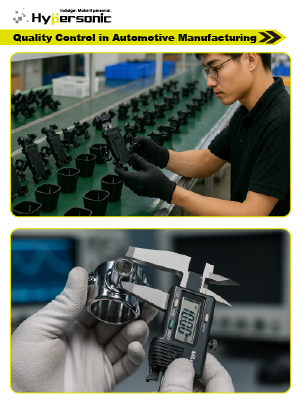
In-Process Quality Control monitors production steps in real time. As components move through welding, machining, painting, assembly, and electrical integration, operators use inspection systems to detect variations immediately. For example, torque sensors confirm fastener accuracy, vision systems check alignment, and measurement gauges verify dimensional accuracy.
Furthermore, IPQC allows the manufacturing team to adjust machines or processes immediately whenever abnormalities appear, which significantly reduces scrap and rework.
Once the vehicle or component reaches the final stage, Outgoing Quality Control validates the finished product before it leaves the factory. This step may include functional tests, durability checks, appearance inspections, and documentation reviews.
Although most major defects should be caught during IPQC, OQC serves as the final safeguard to ensure the product meets internal specifications and customer expectations before delivery.
Statistical Process Control tracks production data to monitor trends and identify deviations before they become defects. By using charts, pattern analysis, and process capability studies, SPC helps engineers maintain consistent quality across large production volumes.
Moreover, SPC offers predictive insights—allowing the factory to spot early warning signs such as tool wear, machine drift, or unstable processes. As a result, quality becomes more proactive instead of reactive.
When a defect occurs, Root Cause Analysis determines why it happened and how to prevent it from recurring. RCA may involve fishbone diagrams, 5 Whys analysis, cross-functional meetings, or teardown evaluations. Although the process can be time-consuming, it ultimately leads to long-term improvements in manufacturing reliability.
Additionally, effective RCA enhances collaboration between the production team, engineering, suppliers, and quality specialists.
A structured QC process covers incoming parts, production stages, and final inspection—ensuring consistency across the entire automotive factory.
Modern automotive factories rely heavily on advanced inspection systems to ensure that every component meets strict quality expectations. Because today’s vehicles include complex materials, electronics, and structural assemblies, inspection tools must deliver precision, repeatability, and real-time feedback. Although traditional manual checks still exist, most factories now use automated or sensor-driven systems to enhance accuracy and reduce human error.
Vision inspection systems use high-resolution cameras and intelligent software to detect surface defects, dimensional inaccuracies, and assembly misalignments. These systems operate rapidly, and they can inspect hundreds of components per minute. Additionally, vision systems reduce subjectivity by providing consistent evaluations under controlled lighting conditions.
Even small imperfections—such as scratches, paint defects, or misaligned fasteners—can be captured immediately, allowing production teams to intervene before defects spread.
3D scanning and metrology tools measure components with exceptional precision, often down to microns. These systems create detailed 3D models that engineers use to compare parts against original CAD designs. Because manufacturing tolerances in automotive engineering are strict, 3D metrology helps identify deformation, warping, and machining errors early.
Torque testing systems ensure that bolts, nuts, and fasteners meet specified torque values. Since unreliable torque can cause vibration, component loosening, or even safety hazards, torque accuracy is a critical QC requirement.
Therefore, factories often use digital torque wrenches, automated tightening tools, and torque audit stations to prevent assembly-related failures.
X-ray and ultrasonic testing allow engineers to examine the internal structure of components without disassembling or damaging them. These non-destructive methods are ideal for detecting hidden flaws such as:
IoT-based sensor networks monitor production conditions continuously. These sensors collect data such as temperature, vibration, pressure, and equipment performance, enabling immediate adjustments when abnormalities appear.
Moreover, inline monitoring allows the QC team to detect early warning signs of equipment wear or process instability—ensuring consistent quality across entire production runs.
End-of-line (EOL) testing validates the final performance of the vehicle or subsystem before it leaves the factory. Depending on the product, EOL tests may include:
Although most defects should be caught during earlier stages, EOL testing remains a crucial last checkpoint to confirm overall product integrity.
Automotive inspection systems—from vision sensors to ultrasonic testing—enable precise, repeatable, and automated defect detection.
In automotive manufacturing, in-process quality control (IPQC) ensures that each production stage delivers components that meet strict requirements. Because defects are easier and cheaper to correct during manufacturing than after final assembly, factories rely on continuous monitoring, frequent inspections, and strong supplier collaboration. Although each plant may differ in workflow, the core principles of IPQC remain consistent across the industry.
The process begins with verifying the raw materials entering the factory. Material certification confirms that steel, aluminum, plastics, and electronic components match the specifications required for safe and consistent production. Furthermore, engineers review chemical composition reports, mechanical strength documents, and batch traceability data.
When material certification is rigorous, the factory reduces the risk of structural failures, premature wear, or assembly inaccuracies later.
Because an automotive factory depends heavily on external suppliers, supplier quality management is essential. Factories typically monitor supplier performance through audits, sample inspections, capability reviews, and defect trend analysis. Additionally, long-term strategic suppliers often collaborate closely with automakers to improve material stability and reduce variability.
Therefore, strong supplier partnerships contribute directly to smoother IPQC performance on the production floor.
Welding is a critical part of automotive body and chassis manufacturing. Because poor welds can compromise structural integrity, welding QC includes processes such as:
Moreover, many modern factories use robotic welding systems, which require continuous calibration and monitoring to maintain consistent quality.
The paint shop is another area where in-process QC is vital. Defects such as dust spots, paint bubbles, orange peel texture, or runs can affect both durability and vehicle appearance. Consequently, paint shop teams rely on robotic sprayers, electrostatic coatings, and controlled environments to minimize contamination.
After each layer, inspectors perform gloss checks, thickness measurements, and surface scans to maintain a high-quality finish.
During powertrain and chassis assembly, technicians and automated systems verify dimensional accuracy, torque values, lubrication quality, fluid levels, and component alignment. Since powertrain systems must handle high stress and temperature extremes, any error can lead to performance issues or safety concerns.
Furthermore, chassis assembly inspections include brake components, steering systems, suspension modules, and other parts that influence driving stability.
Electric vehicles introduce additional QC requirements due to battery safety and high-voltage components. Therefore, EV manufacturing lines include inspections such as:
Because EV components are sensitive to heat, vibration, and manufacturing variations, factories apply stricter IPQC standards to maintain safety and reliability.
In-process quality control plays a central role in ensuring that automotive manufacturing remains consistent, safe, and efficient from start to finish. By validating raw material quality, strengthening supplier collaboration, and applying detailed inspections across welding, painting, and assembly stages, factories can prevent defects before they escalate. Additionally, with the rise of electric vehicles, manufacturers must implement even stricter protocols to manage battery safety and high-voltage components. Altogether, a comprehensive IPQC system helps maintain product reliability, minimizes rework, reduces operational risks, and supports long-term customer trust. Through constant monitoring and continuous improvement, every stage—from steel coils to chassis assembly—contributes to a well-controlled, high-quality production line.
Final vehicle inspection procedures represent the last barrier between the production line and the customer. Although earlier QC stages focus on detecting defects during assembly, this stage ensures the fully assembled vehicle performs exactly as intended. Because any issue found at this point can directly impact safety, reliability, and customer satisfaction, automotive factories rely on structured, repeatable, and highly detailed assessments before approving a vehicle for shipment.
Performance and safety testing confirms that the vehicle responds correctly under typical and demanding conditions. Inspectors evaluate braking distance, acceleration consistency, steering responsiveness, and overall vehicle stability. In addition, essential safety features—such as airbags, seatbelt tensioners, sensors, and basic driver-assist functions—are checked to ensure that every system reacts appropriately.
This step verifies that the vehicle delivers the baseline performance expected by both engineers and end users.
Water leak testing protects the vehicle’s interior and electronics by ensuring the cabin remains fully sealed. The vehicle is exposed to high-pressure water jets or rain simulation systems designed to reveal any leakage around doors, windows, weather strips, sunroofs, lamps, or body joints.
Because even minor leaks can lead to corrosion, electrical malfunctions, or mold development, this test is essential for long-term durability.
Road simulation tests recreate real-world driving scenarios within a controlled environment. Using dynamometers or vibration platforms, inspectors simulate bumps, uneven surfaces, cornering forces, and rapid acceleration. This allows the QC team to detect drivetrain irregularities, structural noises, or suspension issues without leaving the factory.
Consequently, this test identifies issues that might not be visible during static inspections.
NVH inspections evaluate comfort, cabin refinement, and overall build quality. Engineers listen for rattles, squeaks, wind noise, and mechanical vibrations that may indicate loose components or improper alignment.
Because customers often judge quality based on how quiet and smooth a vehicle feels, NVH inspection significantly influences perceived vehicle excellence.
Since modern vehicles rely heavily on electronics, electrical inspections are among the most detailed steps in final QC. Technicians use diagnostic tools to verify the function of sensors, control modules, wiring harnesses, and ECU communication lines. Features such as lights, power accessories, infotainment systems, and climate controls are also tested.
This ensures every electronic subsystem is correctly integrated and ready for real-world use.
Before the vehicle leaves the factory, all inspection results are documented in a digital traceability system. Each vehicle receives an electronic record containing torque data, diagnostic results, assembly confirmations, and inspector signatures.
This data allows manufacturers—and occasionally service centers—to trace issues back to specific processes if problems arise later in the vehicle’s life.
The final inspection stage ensures every vehicle meets performance, safety, and reliability standards before leaving the factory. Through tests like braking and steering checks, water leak validation, road simulation, NVH evaluation, electrical diagnostics, and detailed data logging, manufacturers confirm that the vehicle functions correctly and delivers a refined driving experience. Together, these procedures provide a complete quality safeguard and ensure each unit is fully ready for customers.
As automotive manufacturing becomes more complex, digital transformation has reshaped how factories manage quality control. Although traditional QC methods remain essential, advanced technologies now allow factories to detect defects earlier, predict failures, and optimize processes with unprecedented accuracy. Because modern vehicles rely on software-driven systems and high-precision components, the shift toward digital QC is no longer optional—it is a strategic requirement for maintaining competitiveness and efficiency.
Artificial intelligence significantly enhances defect detection by analyzing images, sensor data, and production patterns far faster than manual inspection. AI systems can identify tiny surface scratches, assembly misalignments, coating defects, and dimensional deviations that may be difficult for human inspectors to spot consistently.
Moreover, AI models improve over time, meaning detection accuracy increases as more data is processed.
Machine learning enables predictive maintenance by analyzing equipment behavior and identifying early warning signs of failure. For instance, algorithms can detect anomalies in vibration levels, temperature changes, or cycle times, predicting when a machine may require servicing.
Because predictive maintenance reduces downtime and prevents production bottlenecks, it directly supports a more stable QC process across the entire automotive factory.
A digital twin is a virtual replica of a physical system, component, or entire production line. Engineers use digital twins to test process changes, simulate equipment behavior, or analyze manufacturing scenarios without disrupting real operations.
When QC teams can simulate outcomes before making adjustments, decision-making becomes faster, safer, and more precise.
Manufacturing Execution System (MES) dashboards collect and display real-time production data, allowing engineers to monitor quality indicators instantly. These dashboards may track torque values, defect rates, cycle times, temperature changes, and sensor alerts.
Since issues are visible the moment they occur, factories can respond immediately—preventing minor deviations from turning into costly quality failures.
Big data analytics aggregates information from sensors, machines, robots, inspection systems, and historical defect records. By analyzing these large datasets, factories can uncover hidden patterns that traditional QC tools may overlook.
For example, analytics can link defect spikes to specific shifts, suppliers, machines, or environmental conditions. Consequently, manufacturers gain deeper insights and can implement targeted improvements quickly.
Summary
Digital transformation is reshaping automotive quality control by combining AI, smart sensors, digital twins, and real-time MES dashboards to detect defects earlier and respond faster. With predictive maintenance and big data analytics, factories can prevent equipment failures, stabilize production, and make more informed decisions. As a result, QC becomes more proactive, data-driven, and efficient across the entire automotive factory.
Even with a strong QC process, automotive factories still face real-world obstacles that can disrupt quality performance. Because production lines are fast, complex, and highly automated, issues often appear in subtle ways. However, by understanding the most common challenges—and how leading factories respond—manufacturers can improve stability and protect product reliability.
Defect variation happens when similar issues appear in different forms or at different frequencies across shifts, lines, or product models. Sometimes the cause is machine wear; other times it is operator technique or material fluctuation.
Therefore, factories often use statistical tools, layered audits, and standardized work instructions to reduce variation. In addition, cross-functional reviews help engineers spot patterns earlier and align corrective actions.
Because automotive factories depend heavily on external suppliers, unstable material quality or delivery delays can quickly affect QC performance. A batch of off-spec components may still look acceptable at first glance yet cause assembly or performance problems later.
To address this, manufacturers build strong supplier management programs, use incoming inspections, track supplier scorecards, and develop dual sourcing strategies. As a result, they reduce risk and keep production more predictable.
Even in automated plants, people still play a key role in quality control. New hires, job rotations, or process changes can create gaps in skills and consistency. However, factories can manage this by using structured training plans, clear visual work instructions, and competency assessments.
Ongoing coaching, plus regular feedback from quality teams, helps operators understand not just what to do but why each step matters for safety and reliability.
Electric vehicles introduce high-voltage systems, battery packs, inverters, and new cooling circuits. These components are more sensitive to temperature, vibration, and assembly errors. Consequently, traditional QC methods are not always enough.
Factories respond by adding specialized tests, stricter insulation checks, thermal performance monitoring, and dedicated EV training for technicians. This way, they prevent issues that could affect both safety and long-term durability.
Modern inspection systems, sensors, and MES platforms generate massive amounts of data. Without structure, engineers can struggle to find what really matters.
To solve this, factories design dashboards, set clear KPIs, and use filters or analytics tools to highlight abnormal trends. In practice, this turns raw data into actionable insights instead of noise.
Every automotive factory must balance production cost with quality expectations. Cutting corners may reduce short-term expenses but can lead to recalls, rework, and brand damage later.
Therefore, many manufacturers adopt a “cost of poor quality” mindset, comparing prevention costs with failure costs. With this approach, investments in automation, better tooling, or training are seen as long-term savings rather than extra expense.
Automotive factories overcome QC challenges through automation, strong supplier management, and continuous training programs, turning everyday obstacles into opportunities for improvement and more stable quality performance.
Automotive quality control is entering a new phase where data, automation, and connectivity shape how factories prevent defects. While traditional QC process steps will remain, the tools used in an automotive factory are rapidly evolving. As a result, inspection systems are becoming more autonomous, more predictive, and more tightly integrated with the entire manufacturing ecosystem.
Autonomous inspection systems combine robotics, vision technology, and AI to perform checks with minimal human intervention. These systems can move around vehicles, scan surfaces, measure gaps, and verify assembly completeness automatically. Moreover, they work at a steady pace and maintain consistent judgment criteria.
Over time, autonomous systems reduce human fatigue, minimize subjectivity, and allow QC teams to focus on analysis rather than repetitive inspection tasks.
Electric vehicles are reshaping quality control priorities. Batteries, power electronics, and high-voltage wiring require more specialized testing methods. Therefore, future QC will place greater emphasis on thermal performance checks, insulation testing, and long-term battery health simulations.
In addition, factories will use more advanced diagnostic tools to monitor cell balancing, charge cycles, and degradation patterns even before vehicles leave the plant.
Sustainability goals are starting to influence how QC systems are designed. Manufacturers are not only checking product quality but also validating energy efficiency, material use, and recyclability. Consequently, future QC programs will track scrap rates, rework levels, and resource consumption more closely.
This shift encourages factories to design processes that reduce waste while still protecting safety and performance.
Robotics will continue to expand beyond assembly into quality inspection itself. Collaborative robots (cobots) can hold sensors, operate gauges, and perform repetitive test sequences alongside human inspectors. Furthermore, advanced automation allows real-time adjustment of process parameters when deviations are detected.
Because of this, robots will help stabilize quality, speed up checks, and reduce the cost of complex inspection routines.
Cloud-based QC ecosystems connect machines, inspection systems, and MES platforms across multiple plants. Data from torque tools, cameras, sensors, and test benches can be aggregated into a shared environment. As a result, engineers can compare performance across factories, suppliers, and product lines.
In the future, this connectivity will enable global quality teams to detect trends early, deploy best practices faster, and update inspection rules centrally.
Future automotive quality control is moving toward highly automated, data-driven systems that rely on autonomous inspections, advanced robotics, and cloud-connected platforms. As EV and battery technologies evolve, QC will focus more on specialized testing, sustainability metrics, and real-time analytics, allowing factories to detect issues earlier, reduce waste, and continuously improve global manufacturing performance.
Quality control in automotive manufacturing is not just a supporting function; it is the backbone that holds safety, reliability, and brand trust together. When an automotive factory builds a structured QC process, every stage—from incoming material checks to final vehicle inspection—works toward the same goal: consistent, defect-free products that meet customer expectations.
Moreover, advanced inspection systems now help factories move beyond basic defect detection. Vision inspection, torque monitoring, NVH testing, and battery diagnostics all contribute to more precise and repeatable control. As a result, the inspection system becomes a strategic asset instead of just a checklist at the end of the line.
At the same time, digital transformation is changing how quality teams operate. AI, sensors, digital twins, and real-time dashboards allow engineers to act earlier, predict issues, and use data to fine-tune the entire QC process. Therefore, automotive manufacturers that embrace digital tools gain faster feedback, better traceability, and stronger decision-making.
Ultimately, safety and reliability remain the core promises behind every vehicle. When QC processes are well-designed, inspection systems are robust, and digital technologies are integrated intelligently, the automotive factory can deliver products that meet both regulatory expectations and real-world customer demands—today and in the future.
This site uses cookies to improve your browsing experience. we’ll assume you’re OK to continue. If you want to read more about this, please click PRIVACY thank you.