Blog


The online car gadget market keeps growing as more drivers shop on platforms like Shopify, Shopee, and Amazon. Because of this, you need a clear product mix strategy instead of randomly adding new SKUs whenever you see a trend. A clear car gadget assortment helps you stand out, reduce complexity, and guide shoppers to products that fit their needs. However, not every item should play the same role in your catalog. Some products bring traffic, while others work as high-margin SKUs that quietly drive most of your profitability. Moreover, a smart portfolio makes it easier to manage inventory, ads, and pricing across channels. In this guide, you will learn how to structure your car gadget assortment step by step for sustainable profitability.
A strong product mix strategy is the backbone of any successful online car gadget store. Without it, your catalog grows randomly, and shoppers struggle to understand what you actually specialize in.
In simple terms, product mix strategy is how you decide which products to sell and why. Instead of listing every trending gadget, you choose items that support clear roles in your car gadget assortment. For a car gadget store, this means planning categories, price points, and high-margin SKUs so the assortment feels intentional. As a result, each product has a job, whether it drives traffic, builds trust, or protects profitability.
A product mix has three key dimensions: width, depth, and consistency. First, width is the number of categories you cover, such as phone mounts, dash cams, chargers, and organizers. Next, depth is how many variants you offer in each line, which affects choice, complexity, and stock risk. Finally, consistency is how closely related those categories and SKUs are, which influences cross-sell potential and customer perception. Because these dimensions shape your catalog, they also influence basket size, gross margin, and repeat purchase behavior.
Compared with fashion or FMCG, car gadgets bring extra challenges like fitment, compatibility, and safety expectations. For example, a phone mount that blocks airbags or sensors can hurt customer trust and harm profitability. Therefore, your car gadget assortment must balance variety with clear information about models, installation, and safe usage. Moreover, you need enough reliable, high-margin SKUs to cover service issues, returns, and support without destroying profit.
A clear product mix strategy defines which car gadgets you sell, how they relate, and what role each SKU plays. By managing width, depth, and consistency on purpose, you shape shopper experience, margins, and long-term profitability. Unlike general retail categories, car gadgets require extra care around fitment and safety, so high-margin SKUs must also be trustworthy. In summary, thoughtful planning of categories and SKUs turns a random catalog into a focused car gadget assortment that supports sustainable profit.
A profitable car gadget assortment does not start with products. Instead, it starts with understanding the market and your customers. Because of this, you should spend time on research before you place any orders or launch new SKUs. When you do this work first, your product mix strategy aligns with real demand instead of guesswork.
Begin by looking at the online stores and marketplaces where your ideal customers already shop. For example, check top sellers on platforms like Shopee, Amazon, or major auto accessory sites. Then review each competitor’s catalog breadth and depth. How many categories do they cover, and how many options do they offer in each line?
Next, note their price ranges and spot clear best-sellers. Many marketplaces list “Top Rated” or “Best Seller” badges, which you can scan quickly. Moreover, you should pay attention to review volume and star ratings, because they reveal what customers value most. Over time, you will see patterns in which car gadget assortment structures win more trust and conversions.
You can also capture this information in a simple spreadsheet. List key competitors, categories, number of SKUs, price bands, and visible promos. As a result, you will see where the market is crowded and where there are gaps. This becomes the starting point for shaping a unique and profitable product mix strategy.
After you map competitors, you need to listen to demand signals. Tools like Google Trends help you see which car gadget keywords are rising or falling in interest over time. In addition, marketplace best-seller lists, such as Amazon Best Sellers in Automotive, show what real shoppers buy right now. Keyword tools from SEO or ads platforms can reveal search volume and competition levels for each product idea.
However, not all customers want the same things from car gadgets. Commuters may care about quick charging and easy phone mounting, while rideshare drivers may value durability and cable management. Car enthusiasts often look for premium materials and brand image, whereas family car owners may focus on safety and backseat organization. Fleet owners usually watch total cost of ownership and installation time more than design.
Therefore, you should map each segment’s needs against price sensitivity. Which groups pay extra for attractive design, and which care more about reliability or warranty? When you know this, you can decide where to place high-margin SKUs and where to keep entry-level options. This mapping turns raw data into practical direction for your car gadget assortment and overall profitability.
Once you understand the market and customer needs, you must choose your position. You can become a niche specialist, or you can aim for a broad generalist assortment. A niche specialist might focus on dash cams and driver safety, or on organizers and storage solutions. In that case, your catalog width is narrow, but depth is high in your chosen categories. This helps you look like an expert and justify higher prices and stronger high-margin SKUs.
On the other hand, a generalist car gadget store covers many categories with fewer SKUs in each. This approach can attract more types of shoppers, yet it can also dilute your brand if not managed carefully. To keep profitability under control, you should still define which categories are strategic and which are just supporting. Moreover, you need clear rules for how many SKUs each category gets and which price tiers you will play in.
In practice, many successful stores choose a hybrid approach. They position themselves as experts in one or two hero categories, while offering a lighter selection in related areas. This way, they can promote a focused product mix strategy and still cross-sell complementary items. As a result, their car gadget assortment looks coherent, supports clear branding, and leaves enough space for high-margin SKUs that drive profit.
This section shows that a profitable car gadget assortment begins with structured research, not random product picking. By analyzing competitor catalogs, price bands, and best-sellers, you learn how other players manage breadth and depth. Then, by using data tools like Google Trends, marketplace best-seller pages, and keyword platforms, you discover what your key segments truly value in terms of design, durability, and price. Finally, you choose whether to act as a niche specialist or a broader generalist and align your product mix strategy with that choice. In summary, this research process helps you define who you serve best, which categories matter most, and where to place high-margin SKUs so your online store grows both sales and profitability.
A smart product mix strategy means every SKU has a clear job. Instead of treating all items as equal, you assign roles that support traffic, volume, and profitability. As a result, your car gadget assortment feels intentional and easier to manage.
First, think of your products as members of a team. Some bring people into the store, while others quietly make the money. Therefore, you should decide which SKUs attract visits, which drive steady sales, and which protect margin.
Traffic driver products are usually popular, searchable, and easy to compare. However, they often have lower margins because many sellers compete on price. Mid-margin staples sell reliably with decent profit and form the backbone of your catalog. Finally, high-margin SKUs are premium or specialized items that push overall profitability upward.
When you define roles this way, you can plan ads, pricing, and stock more clearly. Moreover, your product mix strategy becomes more resilient, because you are not relying on one hero item alone.
Traffic drivers are the SKUs that get clicks and visits from search or ads. For car gadgets, these are often basic phone holders and simple USB chargers. Because shoppers recognize them instantly, they compare prices and ratings very quickly.
You can price these items aggressively to win attention and cart starts. However, you should accept that margins here may be thin. Instead of chasing profit on each unit, you use them to pull shoppers into your funnel. Then you guide buyers toward better options inside your car gadget assortment.
Mid-margin staples sit one step above entry products. For example, branded fast chargers, higher-quality dash cams, or sturdy trunk organizers. These SKUs usually carry better reviews, stronger features, and a healthier margin. Therefore, they support both sales volume and profit.
High-margin SKUs are where your real profitability often comes from. They might be smart organizers with special features, premium phone mounts, or curated bundles. For instance, a “road trip comfort kit” that combines a mount, charger, and organizer.
Because these SKUs solve bigger problems or feel more premium, shoppers accept higher prices. Moreover, bundles often increase average order value without much extra cost. You can also use branding, better packaging, and extended warranties to justify these margins.
To find potential high-margin SKUs, review products with strong perceived value but modest added cost. Look for gadgets that improve safety, save time, or make the car feel upgraded. In addition, check which items customers often buy together and turn them into well-named bundles. Over time, you can refine these offers using performance data and reviews.
A balanced car gadget assortment includes all three roles. Traffic drivers bring people in, staples keep revenue steady, and high-margin SKUs lift overall profit. Thus, your product mix strategy stays stable, even when trends shift or ad costs rise.
In this section, you learned that every car gadget should play a defined role in your portfolio. Traffic drivers, such as basic phone holders and simple chargers, attract visits but often earn lower margins. Mid-margin staples, like branded chargers and quality dash cams, deliver reliable sales with solid profit. Meanwhile, high-margin SKUs, including smart organizers, premium mounts, and branded bundles, drive most of your profitability. When you intentionally blend these three roles inside your car gadget assortment, your product mix strategy supports both growth and protection of margins.
A profitable car gadget assortment does not appear by accident. Instead, you design it in clear steps and link every decision to your product mix strategy. When you follow a structure, you can balance variety, high-margin SKUs, and day-to-day operations more easily.
First, list your key categories, such as phone mounts, chargers, dash cams, organizers, and safety accessories. Then decide what share of your catalog each category should hold. For example, you might target 30% mounts, 25% chargers, 20% dash cams, 15% organizers, and 10% safety items.
Next, set a target mix by product role. You could aim for 40% traffic drivers, 35% mid-margin staples, and 25% high-margin SKUs. Because this breakdown is flexible, you should adjust it based on your niche and customer segment. However, you always want enough premium items to protect profitability.
You also need a minimum viable assortment in each core category. A simple rule is 5–10 SKUs per key category, so the shelf looks credible but not overwhelming. As a result, shoppers feel they have real choice, yet they do not get lost in dozens of nearly identical options.
Once you have targets, you should turn them into a simple assortment matrix. This document becomes the control center for your product mix strategy. Moreover, it makes decisions more objective, since every SKU must fit into a clear slot.
Create a table with columns like:
You can build this matrix in a spreadsheet tool. Then, for each potential product, fill in the row before you place an order. If a new idea does not match any defined slot, you either adjust the plan on purpose or reject the SKU. In this way, the matrix keeps your car gadget assortment focused and aligned with profit goals.
In addition, you can color-code roles or margin levels. This visual layer helps you spot gaps quickly, such as too many low-margin traffic drivers or too few mid-margin staples. Therefore, you can rebalance before problems show up in your inventory or cash flow.
To make the assortment feel complete, you should choose complementary products that naturally go together. For example, pair phone mounts with matching cables and fast chargers. Likewise, link dash cams with memory cards, hard-wire kits, or sun-shade mounts. When you plan bundles at the matrix stage, you push up average order value without losing control.
However, it is easy to slip into over-assortment. You might add five more similar mounts or ten nearly identical cables, just because suppliers suggest them. To avoid this, set clear rules. For instance, you may allow only three core variants per subcategory: good, better, best. In addition, you can cap the total number of SKUs in each role and category.
Regularly review performance against your matrix. If two SKUs fight for the same role and price, you can retire the weaker one. As a result, your catalog stays lean, and operations remain simpler. Meanwhile, shoppers still see a rich and coherent offer that feels competitive.
In this section, you learned a practical way to turn strategy into a concrete car gadget assortment. First, you define the ideal mix of categories and roles, including clear percentages for traffic drivers, staples, and high-margin SKUs. Then, you build an assortment matrix with columns for category, role, price, margin, and target volume, so every SKU has a clear purpose. Finally, you choose complementary products and set limits to prevent SKU bloat, which keeps your product mix strategy focused and manageable. Overall, this step-by-step approach helps you offer enough variety to win customers while still protecting operational simplicity and long-term profitability.
A strong product mix strategy is not only about which SKUs you list. It is also about how you price them, how you bundle them, and how you present cross-sell options. Because of this, smart tactics around price and packaging can lift profitability even when traffic stays the same.
First, you need a clear method for pricing each car gadget. Cost-plus pricing starts from your landed cost and adds a fixed margin. This method is simple, yet it can ignore how much customers are actually willing to pay.
Value-based pricing starts from perceived value instead. For a premium dash cam or smart organizer, you look at how much time, safety, or comfort it adds. Then you set a higher price that reflects that benefit. As a result, these high-margin SKUs carry more profit without feeling unfair.
You can also use charm pricing, such as 19.90 instead of 20.00. Although the difference is small, shoppers often see the first number and judge the price as lower. In addition, price anchoring helps. You show a premium option beside a mid-range one, so the mid-range SKU looks more affordable. This way, your car gadget assortment nudges buyers toward profitable choices.
Bundles are one of the fastest ways to increase average order value. A “Starter car gadget kit” might include a basic phone mount, a cable, and a dual-port charger. Meanwhile, a “Road trip bundle” can add organizers and comfort items. For rideshare drivers, a “Ride-hailing pro kit” could include durable mounts, extra chargers, and cable management tools.
Inside each bundle, you should place at least one high-margin SKU. The extra profit on that item helps offset discounts or free shipping offers. Moreover, bundles make it easier for shoppers to buy a complete solution instead of just one product.
When you build bundles, use clear names that describe the use case, not only the items. This approach helps customers understand value quickly. In addition, you can test different bundle compositions and prices over time. If one version converts better, you can promote it as the default offer in your product mix strategy.
Cross-sell and upsell flows help you capture extra value from each visit. On product pages, “Frequently bought together” sections can suggest cables with mounts, memory cards with dash cams, or organizers with trash bins. Thus, your car gadget assortment feels curated rather than random.
Upsells invite customers to move from a basic SKU to a better or best version. For example, you can show a premium mount with stronger magnets or a dash cam with night vision. Because these upgrades often sit in your high-margin SKUs, they support overall profitability.
You should also extend cross-sell logic into the cart and checkout. Simple prompts like “Add a fast charger and save 10%” can lift basket size without heavy discounts. Moreover, you can run A/B tests on pricing, bundle names, and recommendation layouts. Over time, data from these tests will refine how your product mix strategy turns visits into revenue.
In this section, you saw how pricing, bundling, and cross-sell flows add a monetization layer on top of your car gadget assortment. Cost-plus and value-based pricing set the foundation, while charm pricing and anchoring guide shoppers toward more profitable SKUs. Carefully designed bundles, such as starter kits or ride-hailing sets, use high-margin SKUs to raise average order value. Finally, cross-sell and upsell flows on product pages, carts, and checkouts help each visitor buy a more complete solution. Together, these tactics turn your product mix strategy into a powerful engine for sustained profitability.
A smart product mix strategy only works if you can fund and move stock smoothly. Therefore, you must manage inventory, MOQ, and cash flow with the same discipline you use for your car gadget assortment. When you do this, you protect profitability and avoid the classic “all my money is stuck in the warehouse” problem.
First, connect your inventory plan to the roles you defined earlier: traffic drivers, mid-margin staples, and high-margin SKUs. Traffic drivers and key staples usually become your A-items, because they sell fast and often.
Use a basic ABC analysis:
A-items deserve the most attention and stock, since they drive revenue and traffic. However, you should still keep service levels healthy for selected high-margin SKUs, even if volume is lower. This is because losing stock on profitable items hurts margin more than losing one extra traffic driver.
MOQ (minimum order quantity) can eat your cash if you accept every supplier proposal. Therefore, you should negotiate MOQ and payment terms with product roles in mind. For experimental or long-tail SKUs, push for lower MOQs. As a result, you test ideas without overloading inventory.
For proven high-margin SKUs, you can negotiate in another way. You may accept a slightly higher MOQ in exchange for better unit cost or payment terms. In addition, you can ask for:
Because these SKUs generate stronger profit per unit, better terms here have outsized impact on overall profitability. Moreover, strategic partners are often willing to support you if you share clear sales data and a solid plan.
Dead stock is inventory that barely moves, drains cash, and clutters your operation. To avoid this, you should track sell-through rates and stock aging for each role. If a traffic driver does not move within a set period, something is wrong with price, content, or demand.
Set simple rules, such as:
However, do not let clearance become your main strategy. Instead, use it to clean up mistakes and free cash for better SKUs. In addition, cap the number of experimental products you run at once. This way, your car gadget assortment stays focused, and your warehouse does not turn into a graveyard of forgotten gadgets.
When a product proves itself with good sell-through and solid margin, you can reorder more aggressively. Link reorder rules to roles and performance, not just gut feeling. Over time, this feedback loop keeps the best car gadgets in stock while you quietly phase out weak items.
In this section, you connected your product mix strategy to practical inventory management. By planning stock around product roles and using ABC analysis, you focus on fast movers and key high-margin SKUs. Then, by negotiating MOQs and supplier terms with clear priorities, you prevent cash from getting trapped in slow products. Finally, by tracking sell-through and stock age, you reduce dead stock, limit risky experimental SKUs, and reorder proven winners more confidently. Overall, these habits align your car gadget assortment with healthy cash flow and long-term profitability, instead of short-lived sales spikes.
Even with a strong product mix strategy, your store still needs great merchandising and UX to convert visitors. Because shoppers make fast decisions, the way you display your car gadget assortment directly affects both conversions and profitability. Clear structure, strong visuals, and smart highlights can guide customers toward the right products—especially your high-margin SKUs.
Your category pages should help visitors find what they want quickly. Therefore, use clear and intuitive filters such as:
These filters reduce decision fatigue and help customers move deeper into your assortment. Moreover, you should organize categories with simple labels like Phone Mounts, Dash Cams, Charging Solutions, and Organizers. A clean layout with consistent thumbnails makes your car gadget assortment feel organized and trustworthy.
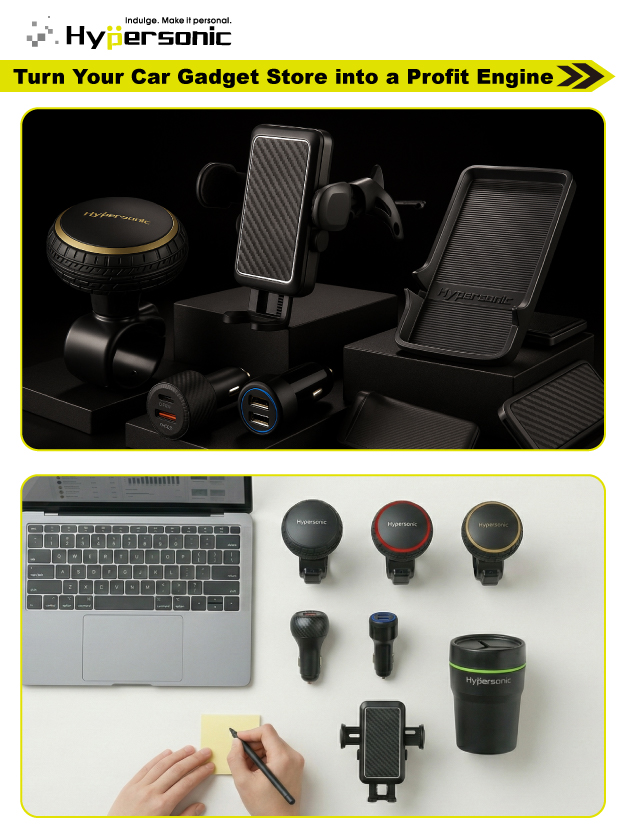
In addition, include an optional image banner showing your full assortment.
This visual cue gives shoppers instant context and supports your product mix strategy.
Product pages must communicate value clearly. Use strong, well-lit images that show the gadget in real use—not only flat-lay photos. Benefit-focused copy works better than technical descriptions alone. For example, instead of saying “Magnetic 12N hold force,” write “Keeps your phone stable even on bumpy roads.”
Moreover, comparison tables can speed up decision-making. When shoppers see the difference between basic, mid-range, and premium versions, they more often choose higher-value options. This boosts average order value and helps your high-margin SKUs shine.
Other best practices include:
All these elements reduce friction and make your car gadget assortment feel more premium.
Highlighting high-margin SKUs is essential for maximizing profitability. You can add visual tags like:
These micro-labels guide shoppers toward your most profitable items without pushy sales tactics. Moreover, place these highlighted items higher on category pages or in featured product grids.
For bundles—especially profitable ones—use lifestyle images that show the full set inside a car.
Finally, ensure the entire UX is mobile-first. Car gadget shoppers often browse on their phones, so fast load times, clean buttons, and thumb-friendly layouts improve conversions significantly.
This section explained how smart merchandising and UX turn a well-planned product mix strategy into real sales. By structuring category pages with clear filters, designing benefit-focused product pages, and using visual cues to highlight high-margin SKUs, you make your car gadget assortment easier to navigate and more compelling. Together, these UX improvements increase both conversions and overall profitability, helping shoppers quickly find value while supporting your business goals.
Refreshing your car gadget assortment becomes much easier when you follow a structured plan. Instead of guessing which SKUs to keep or cut, you can use a systematic process that aligns with your product mix strategy and supports long-term profitability.
This checklist helps you rebuild or refine your assortment with clarity and confidence:
To make the process easier, create a simple Excel or Google Sheet template. Include columns such as:
You can reuse this template every quarter during your assortment refresh. Over time, you will see patterns in how your car gadget assortment behaves, making forecasting and planning more accurate.
If you want, this sheet can also include conditional formatting—such as highlighting low-margin items in red or spotlighting high-margin SKUs in green. Additionally, you may add a tab for bundle ideas or competitor benchmarking to keep your product mix strategy aligned with market trends.
This section provided a practical 10-step framework to refresh your car gadget assortment with confidence. By auditing SKUs, classifying product roles, improving pricing and bundles, and updating inventory rules, you ensure every item in your catalog has purpose and profit potential. The reusable template helps you turn this strategy into a repeatable process, making it easier to scale your assortment while strengthening profitability.
A profitable car gadget business is built on more than trending products—it relies on a strategic product mix, a data-driven car gadget assortment, and a deliberate focus on high-margin SKUs. When you classify each product by role, structure your categories clearly, and optimize pricing, bundling, and cross-sells, your store becomes far more efficient at turning traffic into revenue. Moreover, when you manage inventory with intention and refine your merchandising, your overall profitability increases without relying on aggressive discounts or constant new launches.
Although this transformation may feel big, you do not need to overhaul everything at once. Instead, start with a few high-impact changes: adjust pricing on your top 20 SKUs, redesign one or two bundles, or reorganize your category pages with better filters. Gradually, these improvements stack together and create a more profitable, easier-to-manage store.
If you want to accelerate your progress, you can take the next step today. Download the product mix planning template or book a consultation to build a tailored product mix strategy and grow your car gadget store with confidence.
This site uses cookies to improve your browsing experience. we’ll assume you’re OK to continue. If you want to read more about this, please click PRIVACY thank you.