Blog


As driving environments become more complex, car gadgets safety is no longer a niche topic—it is a core part of everyday mobility in 2026. On one hand, urban congestion continues to rise, while on the other hand, driver distraction has increased due to navigation systems, in-car screens, and denser traffic conditions. As a result, real-world driving safety faces challenges that go far beyond what traditional vehicle design once anticipated.
Although modern vehicles are increasingly equipped with factory-installed ADAS features, there is still a noticeable gap between these systems and actual driving behavior. For example, advanced technology may assist with alerts, yet it cannot always compensate for human reaction time, limited visibility, or situational awareness in unpredictable traffic scenarios. Therefore, drivers are turning their attention to practical, human-centered solutions.
This shift explains why aftermarket driver assistance accessories are gaining renewed importance. From steering-focused tools to visual enhancement devices, these accessories are designed to work alongside existing systems, not replace them. In fact, many of today’s automotive safety trends point toward a hybrid approach—combining built-in technology with targeted, real-world safety gadgets.
In this article, we will explore how specific car gadgets are improving driving safety in 2026, focusing on steering control, visibility, and everyday usability across diverse driving conditions.
In 2026, the driving environment has become noticeably more demanding. On the one hand, traffic density continues to rise in major cities, while on the other hand, roads are now shared by a diverse mix of users, including cyclists, electric scooters, delivery vans, and ride-hailing vehicles. As a result, drivers face more unpredictable situations than ever before. In this context, car gadgets safety is no longer about convenience—it is about managing daily risk.
Although vehicle technology has advanced rapidly, human behavior has not evolved at the same pace. In fact, human error still remains the number one factor in traffic accidents worldwide. Drivers misjudge distances, overlook blind spots, or react too slowly under pressure. Therefore, even the most advanced systems cannot fully compensate for distraction, fatigue, or limited situational awareness. This gap between technology and real-world behavior continues to challenge road safety.
At the same time, factory-installed ADAS systems, while valuable, are not designed to cover every driving scenario. For this reason, aftermarket driver assistance accessories are becoming increasingly important. Rather than replacing built-in systems, these tools are designed to complement them by addressing specific, high-frequency situations such as low-speed maneuvering, parking, lane changes, and steering control. Consequently, drivers gain practical support exactly where they need it most.
Meanwhile, consumer expectations are also shifting. Instead of waiting to purchase new vehicles, many drivers now prefer affordable safety upgrades that can be added to existing cars. As budgets tighten and vehicle ownership cycles lengthen, practical safety gadgets offer a cost-effective way to improve everyday driving confidence without major investment.
Summary:
In 2026, increased traffic density, mixed road users, and persistent human error have made everyday driving more complex and risk-prone. While ADAS provides essential baseline support, real-world safety increasingly depends on practical, affordable car gadgets that complement existing systems. As a result, safety-focused accessories have become a necessity for modern drivers, not a luxury.
Over the past decade, automotive safety trends have moved away from passive protection toward active prevention. Previously, safety systems were mainly designed to reduce injury after a collision occurred, such as airbags or reinforced vehicle structures. However, in 2026, the primary goal is to prevent accidents before they happen. Therefore, technologies and tools that support driver awareness, visibility, and control are now seen as critical components of everyday safety, not just emergency safeguards.
At the same time, ADAS adoption has expanded rapidly across global markets. Features like lane-keeping alerts, collision warnings, and adaptive cruise control are becoming increasingly common. However, real-world driving often reveals their limitations. For instance, these systems may struggle in dense urban traffic, poor weather conditions, or situations involving unpredictable human behavior. As a result, drivers cannot rely entirely on built-in technology to manage every safety challenge they encounter on the road.
Because of these limitations, modular and accessory-based safety solutions are gaining importance. Instead of depending solely on factory-installed systems, drivers are choosing targeted tools that address specific driving scenarios. These solutions are flexible, vehicle-independent, and easier to update over time. Consequently, safety is no longer defined only by vehicle design, but by how drivers actively equip their cars to handle real-world conditions.
Another key trend is the growing influence of data-driven safety awareness. Accident statistics, insurance data, and fleet reports consistently highlight common risk areas such as blind spots, low-speed maneuvers, and driver fatigue. As this information becomes more accessible, drivers increasingly seek practical solutions that directly reduce these documented risks rather than relying solely on abstract technology.
Summary:
Broader automotive safety trends emphasize active prevention, adaptability, and real-world effectiveness. While ADAS systems provide essential baseline support, their limitations in complex driving environments have increased demand for supplemental car gadgets. As drivers become more data-aware and safety-conscious, practical accessories naturally emerge as essential tools for bridging the gap between technology and everyday driving behavior.
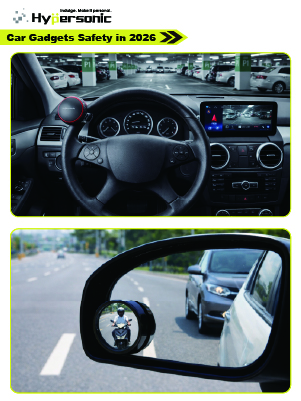
A steering wheel knob is a compact driving aid attached to the steering wheel that allows one-handed steering with smoother rotation. Rather than being a shortcut device, it is designed to improve steering efficiency by reducing the physical effort required to turn the wheel. When used correctly, it enhances control in situations that demand frequent or precise steering input. Therefore, understanding its function is essential before discussing steering wheel knob safety in real-world driving.
Low-speed driving is where many steering-related incidents occur, especially during parking, U-turns, or navigating narrow streets. In these scenarios, fine control matters more than speed. A well-designed steering wheel knob allows drivers to maintain a stable grip and consistent steering motion. As a result, steering inputs become more precise, reducing overcorrection and sudden wheel movements. From a car gadgets safety perspective, this improved control directly lowers the risk of minor collisions and curb-related damage.
Steering wheel knobs are particularly effective in high-frequency steering environments. For example, urban parking requires constant wheel rotation in tight spaces. Similarly, delivery drivers who make repeated stops benefit from reduced hand strain and quicker steering response. On the other hand, during long-distance driving, ergonomic steering support can help reduce fatigue over extended hours behind the wheel. Consequently, these use cases highlight that steering knobs are not niche tools, but practical aids for everyday driving demands.
However, steering wheel knob safety depends heavily on correct installation and material quality. A poorly secured or low-grade knob can introduce risk instead of reducing it. Therefore, secure mounting systems, durable materials, and proper compatibility with the steering wheel are essential. Responsible use begins with choosing products designed to meet safety expectations and installing them correctly.
A common misconception is that steering wheel knobs encourage careless one-handed driving. In reality, when used responsibly, they are control-enhancing tools, not shortcuts. The key lies in proper usage, situational awareness, and compliance with local regulations.
Summary:
Steering wheel knobs enhance driving safety by improving control and precision, especially during low-speed maneuvers and repetitive steering situations. However, true steering wheel knob safety depends on quality design, secure installation, and responsible use. When applied correctly, they function as effective car gadgets safety tools that support real-world driving needs rather than compromise them.
Even with modern vehicle design, factory-installed side mirrors have physical limitations. While they provide a broad rear view, they cannot fully eliminate blind spots created by vehicle pillars, mirror angles, or adjacent lane positioning. As a result, drivers may fail to detect fast-approaching vehicles, motorcycles, or cyclists, especially during lane changes. This limitation becomes more pronounced in dense traffic environments where reaction time is limited.
A blind spot mirror is designed to expand the driver’s field of vision by offering a wider-angle perspective. By capturing areas that standard mirrors cannot cover, it allows drivers to visually confirm adjacent lanes before changing position. Therefore, lane-change decisions become more informed and less dependent on guesswork. From a safety standpoint, this simple visual aid directly addresses one of the most common causes of side-impact accidents.
In urban settings, blind spot mirrors are especially valuable when navigating multi-lane roads, intersections, and frequent merges. Cyclists and scooters often appear suddenly, and additional visual coverage can prevent near misses. On highways, the benefits shift toward speed awareness. Vehicles approach faster, and blind spot mirrors help drivers judge distance and closing speed more accurately. Consequently, they enhance confidence without encouraging risky behavior.
One of the strongest advantages of blind spot mirrors is their cost-to-safety ratio. Compared to advanced electronic systems, they are affordable, easy to install, and compatible with almost any vehicle. As driver assistance accessories, they offer immediate safety improvements without requiring complex calibration or significant financial investment.
Summary:
Blind spot mirrors address a fundamental visibility gap left by factory-installed mirrors. By expanding visual coverage, they significantly reduce lane-change risk in both urban and highway driving. As a low-cost yet highly effective driver assistance accessory, this simple tool demonstrates how practical visual aids can meaningfully improve real-world driving safety.
Factory-installed ADAS systems are designed to provide broad safety coverage using sensors, cameras, and software. They excel at detection and alerts, yet they are often limited by cost, vehicle trim level, and environmental conditions. In contrast, driver assistance accessories focus on practical, hands-on support. Rather than analyzing data in the background, these tools directly assist the driver’s physical interaction with the vehicle. As a result, accessories often address everyday driving challenges that large-scale systems overlook.
Many effective safety solutions are surprisingly simple. Mirrors that expand visibility, steering aids that improve control, visual alerts, and ergonomic supports all fall into this category. These tools do not attempt to replace electronic systems. Instead, they enhance driver awareness and comfort at critical moments. From a car gadgets safety perspective, this direct interaction helps reduce hesitation, overcorrection, and fatigue—factors closely linked to real-world incidents.
Another important advantage of driver assistance accessories is accessibility. Drivers with reduced strength, limited mobility, or age-related challenges often benefit significantly from ergonomic aids and visibility enhancements. While ADAS may issue warnings, accessories help drivers physically respond more effectively. Therefore, these tools play a key role in inclusive mobility by allowing more people to drive safely and confidently.
Not all vehicles on the road are equipped with modern safety systems. In fact, many drivers continue to rely on older models without advanced electronics. For these drivers, aftermarket accessories provide a practical path to improved safety. Because they are vehicle-agnostic and easy to install, accessories allow safety upgrades without the need to replace the entire car. Consequently, safety becomes more accessible across different budgets and vehicle ages.
Summary:
Driver assistance accessories function as practical extensions of factory ADAS by directly supporting driver control, visibility, and comfort. While OEM systems provide essential baseline protection, accessories fill real-world gaps, improve accessibility, and enable safety retrofits for older vehicles. Together, they form a more flexible and inclusive safety ecosystem suited to modern driving conditions.
As demand for aftermarket safety solutions grows, product quality has become a critical concern. While many accessories are designed with safety in mind, poorly manufactured gadgets can introduce new hazards. Weak materials, unstable structures, or imprecise tolerances may interfere with steering, visibility, or driver movement. Therefore, within current automotive safety trends, quality control is no longer a secondary consideration—it is a foundational requirement for real-world safety.
Even high-quality car gadgets can become unsafe if they are installed incorrectly or used on incompatible vehicles. Accessories must align with vehicle dimensions, steering systems, and interior layouts without restricting normal operation. For this reason, proper installation and compatibility checks are essential. Safety does not come from the product alone, but from how well it integrates with both the vehicle and the driver’s habits.
Another common concern is the idea that safety gadgets encourage over-reliance and careless driving. However, this belief often misunderstands their purpose. Safety tools are not meant to replace driver attention or responsibility. Instead, they are designed to support better decision-making and control. When used correctly, they enhance awareness rather than diminish it. Thus, misuse—not usage—is the real risk factor.
Fear-based messaging can discourage drivers from adopting helpful safety tools. In contrast, education empowers better choices. By understanding how car gadgets work, where they are effective, and what their limits are, drivers can use them responsibly. This educational approach reflects the direction of modern automotive safety thinking.
Summary:
Safety is not determined by whether car gadgets are used, but by how they are selected and applied. In line with evolving automotive safety trends, informed choice, proper installation, and responsible use are essential. When guided by education rather than fear, safety accessories become reliable tools that reduce risk instead of creating it.
As vehicle technology evolves, regulatory frameworks are also becoming more structured and consistent worldwide. In 2026, regulators increasingly focus on how aftermarket accessories interact with core vehicle systems. Rather than banning safety accessories outright, authorities emphasize risk prevention, functional integrity, and proper usage. As a result, products related to steering wheel knob safety are evaluated based on design intent, installation method, and real-world impact on vehicle control.
Compliance begins at the design stage. Materials must be durable, non-slip, and resistant to wear, while mechanical structures must remain stable under repeated use. If an accessory loosens, deforms, or interferes with steering input, it quickly becomes a safety risk. Therefore, compliant design is not only about meeting regulations, but also about ensuring predictable, long-term performance in everyday driving conditions.
For buyers, compliance is a direct indicator of reliability and safety. Products developed with recognized standards in mind are more likely to perform consistently and integrate smoothly with the vehicle. In contrast, non-compliant accessories may create legal uncertainty, void warranties, or compromise driving control. Consequently, standards protect both safety and investment value.
Manufacturers carry the responsibility of testing, documentation, and transparent usage guidance. Clear instructions and honest communication are essential to ensure responsible use.
Summary:
Regulatory compliance in 2026 supports safer driving by promoting stable design, reliable materials, and responsible use. For steering wheel knob safety and similar accessories, compliance builds trust, reduces risk, and ensures long-term usability for both drivers and manufacturers.
When choosing safety products in 2026, impulse buying is no longer enough. Instead, drivers should begin with a clear evaluation checklist. First, identify the specific driving risks you want to reduce, such as limited visibility, steering control, or fatigue. Then, assess whether the product directly addresses those risks. From a car gadgets safety perspective, effectiveness in real-world use is far more important than added features or marketing claims.
Next, pay close attention to materials and construction. Safety-focused gadgets should be made from durable, wear-resistant materials that maintain performance over time. In addition, evidence of testing—whether internal, third-party, or industry-based—adds an extra layer of confidence. Poor durability often leads to loosening, breakage, or interference with vehicle operation, which undermines safety rather than improving it.
Brand credibility also plays a critical role. Reputable manufacturers tend to provide clear installation instructions, usage guidelines, and product specifications. They are also more likely to invest in consistent quality control. Therefore, choosing established brands reduces uncertainty and aligns with long-term safety expectations. Transparency is often a stronger indicator of reliability than price alone.
Finally, safety gadgets should match how and where you drive. Urban drivers, highway commuters, fleet operators, and elderly drivers all face different challenges. Selecting driver assistance accessories that align with your daily driving environment ensures meaningful safety benefits instead of unnecessary complexity.
Summary:
Selecting the right safety-focused car gadgets in 2026 requires a structured approach. By evaluating real driving needs, prioritizing durable and tested materials, choosing credible brands, and matching accessories to specific use cases, drivers can make informed decisions. This framework ensures that car gadgets safety investments deliver practical, reliable improvements rather than superficial upgrades.
Looking ahead, automotive safety trends indicate that car gadgets will increasingly integrate with smart vehicle ecosystems. While accessories have traditionally operated independently, future designs are expected to align more closely with in-car displays, sensors, and digital feedback systems. As a result, safety gadgets will not compete with vehicle technology, but instead work alongside it to enhance driver awareness and responsiveness in real time.
At the same time, safety innovation is moving toward a more human-centric approach. Rather than focusing only on automation, designers are paying closer attention to how drivers physically interact with their vehicles. Therefore, ergonomics, visibility, and intuitive control are becoming central design priorities. This shift recognizes that even in advanced vehicles, human judgment and comfort remain critical to safe driving outcomes.
Another key development is the rise of adaptive safety accessories. Instead of one-size-fits-all solutions, future car gadgets are expected to respond to different driving styles, environments, and user needs. For example, accessories may be optimized for urban commuting, commercial driving, or aging drivers. Consequently, safety becomes more personalized and context-aware.
Beyond 2026, car gadgets are likely to evolve from simple add-ons into intelligent safety partners. Their role will expand as vehicles become more connected, yet still dependent on human input.
Summary:
The future of car gadgets safety lies in integration, adaptability, and human-centered design. As automotive safety trends continue to evolve, accessories will play an increasingly important role as flexible, responsive partners in safer mobility—bridging the gap between advanced vehicle technology and real-world human driving behavior.
As driving environments continue to evolve, safety in 2026 is no longer defined by technology alone, but by how effectively drivers are supported in real-world conditions. Throughout this article, one message remains clear: everyday risks such as congestion, visibility gaps, fatigue, and human error still shape most driving incidents. Addressing these challenges requires practical solutions that work where drivers actually need them.
Safety-focused accessories play a critical role in this landscape. Rather than competing with built-in vehicle systems, they complement them by enhancing control, awareness, and comfort in specific driving scenarios. From urban streets to highways and commercial use, these tools help bridge the gap between advanced technology and human behavior.
At Hypersonic, safety is approached with professionalism, responsibility, and long-term thinking. By encouraging informed selection and proper use, the goal is not to sell fear, but to support smarter, safer driving decisions. Drivers who understand their risks and equip their vehicles thoughtfully are better prepared for the realities of modern mobility—today and well beyond 2026.
This site uses cookies to improve your browsing experience. we’ll assume you’re OK to continue. If you want to read more about this, please click PRIVACY thank you.